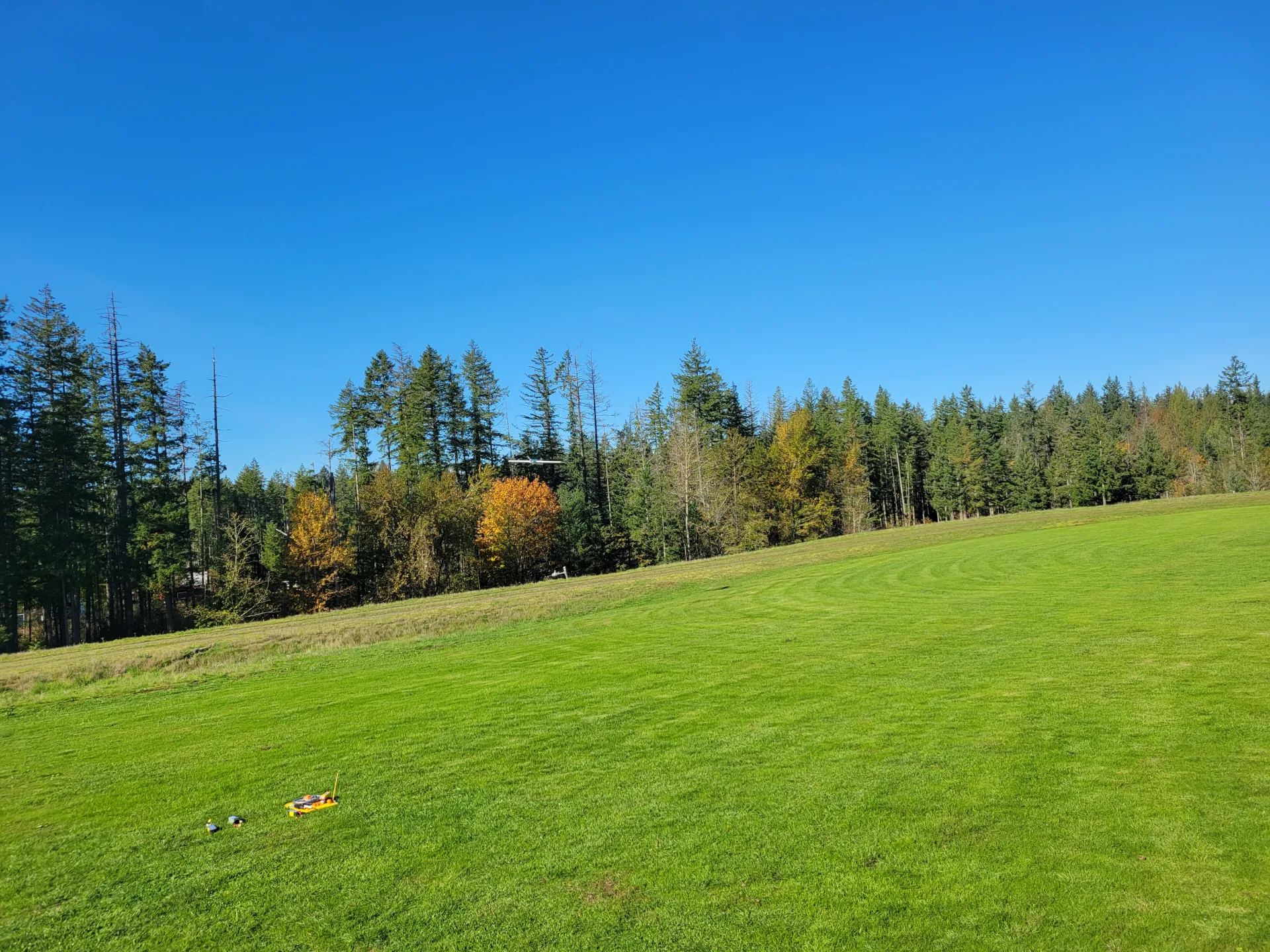
How the Field Came To Be
About this article
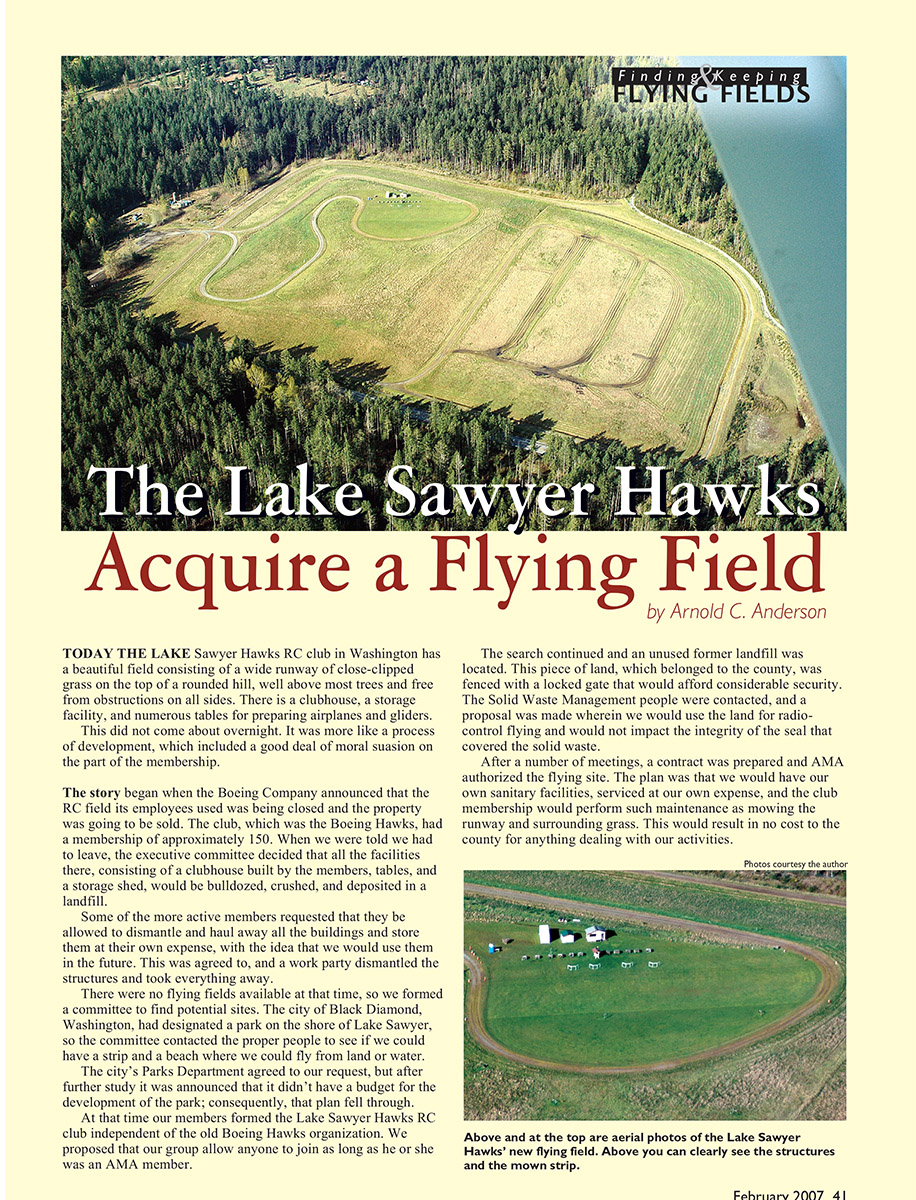
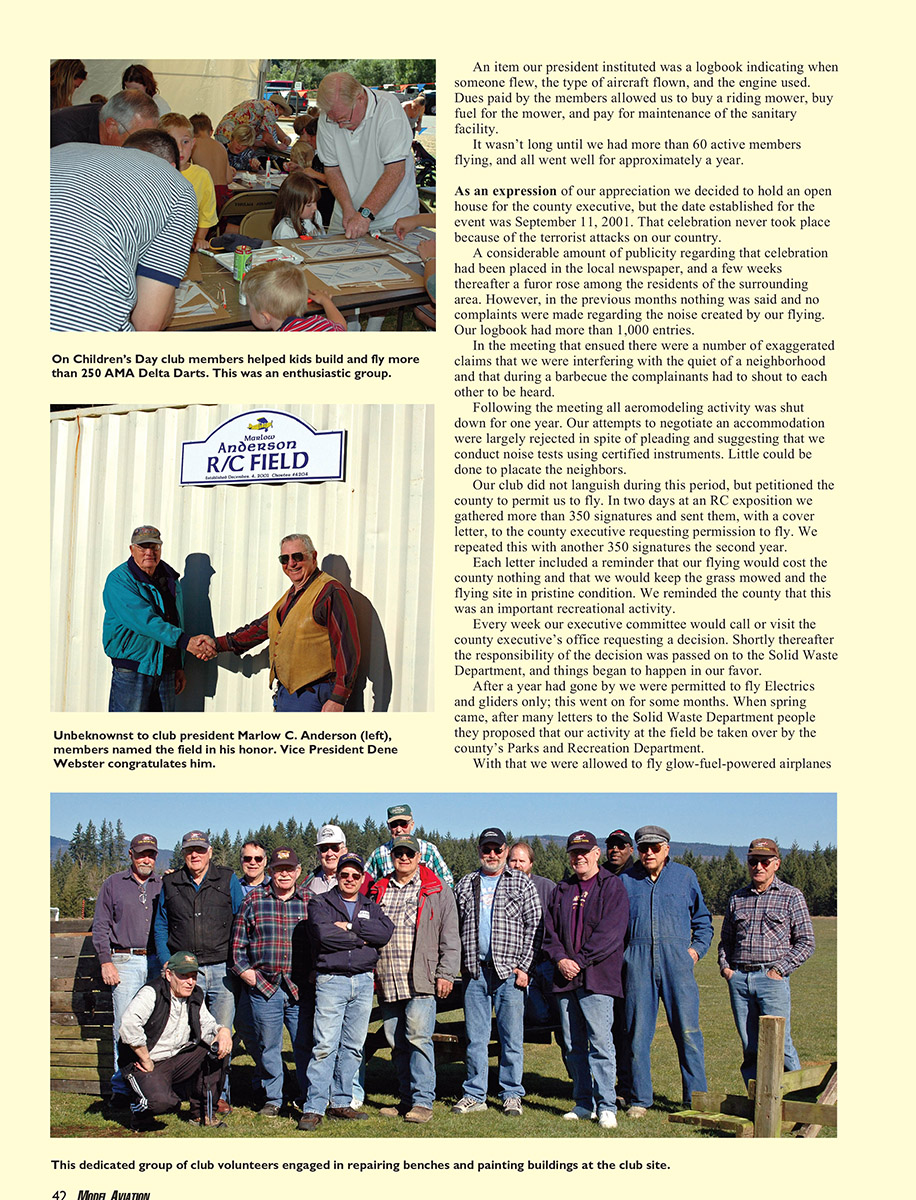
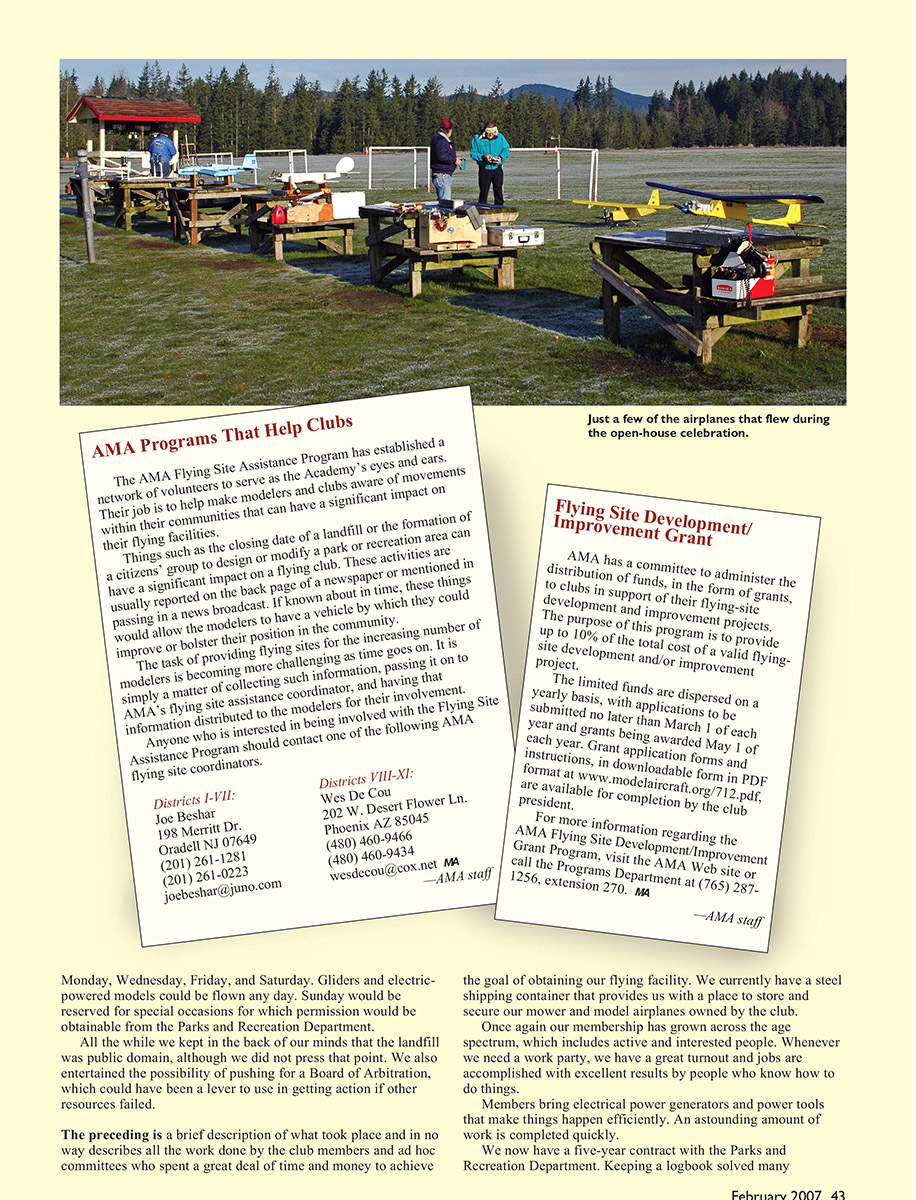
The original article — “The Lake Sawyer Hawks Acquire a Flying Field” — was published by the Academy of Model Aeronautics in Model Aviation magazine. The narrative below is a paraphrased summary of those events; the original magazine pages are reproduced further down for reference and credit.
The Story, In Brief
-
1
The Beginning
Losing the Boeing Hawks field
The story begins with the Boeing Hawks — a roughly 150-member club that flew on land owned by the Boeing Company. When the company announced it was closing the field and selling the property, the executive committee learned that the on-site clubhouse, tables and storage shed were all slated to be bulldozed and dumped in a landfill.
-
2
Saving What Could Be Saved
A work party rescues the buildings
Active members asked permission to dismantle and haul the structures away at their own expense, intending to use them again at a future site. Permission was granted, and a volunteer work party took the buildings apart piece by piece and stored them.
-
3
False Start at Lake Sawyer
A park plan that fell through
A search committee approached the City of Black Diamond about a park on the shore of Lake Sawyer, hoping for a strip and a beach for both land and water flying. The Parks Department initially agreed but later determined it had no budget to develop the park, and the plan ended there.
-
4
A New Club Is Formed
The Lake Sawyer Hawks
With the Boeing connection now ended, the members re-organized as the Lake Sawyer Hawks RC Club, open to any AMA member rather than restricted to Boeing employees.
-
5
Finding the Site
An old county landfill, fenced and gated
The committee eventually located an unused former landfill owned by King County — already fenced and gated, which would provide good security. After meetings with the Solid Waste Management division, a proposal was developed: the club would fly there without compromising the cap that sealed the underlying waste, and would take care of the maintenance themselves.
-
6
A Contract, and AMA Approval
The site is authorized
After many meetings, a contract was prepared and the AMA authorized the flying site. The club agreed to provide its own sanitary facilities and to handle mowing and grounds maintenance — meaning the county would bear no costs for the club’s use of the land.
-
7
September 2001
A celebration that never happened
Membership grew past 60 active flyers, and after about a year of operation the club planned an open house to thank the county executive. The event was scheduled for September 11, 2001, and the terrorist attacks that morning meant the celebration never took place.
-
8
The Quiet Year
A neighborhood objection — and a one-year shutdown
Publicity around the planned open house drew the attention of nearby residents, and a wave of complaints followed — even though the months prior had been quiet, with more than a thousand log-book flights on the books. Operations were halted for a year while the club tried, mostly unsuccessfully, to negotiate an accommodation.
-
9
Petition Drives
700+ signatures from the RC community
Rather than give up, members set up at RC expositions and gathered more than 350 signatures in two days, sending them with a cover letter to the county executive. They repeated the effort the following year for another 350 signatures, each appeal reminding the county that the club cost it nothing and kept the site in pristine condition.
-
10
Flying Resumes
Electrics first, then full glow power
Eventually responsibility for the site moved to the Solid Waste Department and things began to move in the club’s favor. Electrics and gliders were allowed first, and after further work with staff, oversight transferred to the King County Parks and Recreation Department — at which point glow-fuel-powered airplanes were permitted again, until 2022 when the Club permanently became an Electric Only Field again.
-
11
The Logbook
How a notebook ended the complaints
The club president instituted a logbook tracking who flew, what aircraft, and what engine. Copies were sent to the Parks and Recreation manager every month. When a complaint came in on a day the log showed nobody had been flying, the case was settled — and the complaints stopped.
-
12
Today
The Marlow Anderson R/C Airfield
Without his knowing it, the membership voted to name the field in honor of club president Marlow C. Anderson. The result is the field the Hawks fly today: a wide grass runway atop a rounded hill, well above the surrounding trees, with a clubhouse, storage and prep tables — built and maintained, then as now, almost entirely by volunteers.
The Original Article — Model Aviation , February 2007
Click any page to enlarge. Pages reproduced here for the historical record of the club, with full credit to the Academy of Model Aeronautics. All rights to the original article and photographs remain with their respective owners.

Members Who Made It Happen
As recognized in the article, the following members were named for their contributions to acquiring and establishing the field. The Hawks owe their home to their work.
- Marlow C. Anderson — President — field named in his honor
- Dave A. Webster — Vice President
- Charles (Dan) Voracell — Treasurer
- Amy Kuipers — Secretary
- Dave (Skip) Nuson — Secretary
- Arnold C. Anderson — Corresponding Secretary — author of the article
- Reno Burnett
- Richard Joslin
- Dennis Long
- James Gray
- Betty Gray
- Ken Hutchinson
- William Hywood
- Buddy James
- Thomas C. Schwartz
Source & credit: Anderson, Arnold C. “The Lake Sawyer Hawks Acquire a Flying Field.” Model Aviation , February 2007, pages 41–46. Published by the Academy of Model Aeronautics . Photographs courtesy the author.
The original article and accompanying photographs are the property of their respective copyright holders. The scanned pages are reproduced on this club page for historical and archival purposes, with full attribution. All rights reserved by the original publisher.
From a closed Boeing field to a flying home of our own.
The work of those early members is why the Hawks are still flying today.